If your house was built before about 1950 in Binghamton, Johnson City, or Endicott, there is a good chance the walls have never been insulated at all, and there is a way to fix that without opening them up.
Injection foam is polyurethane injected under low pressure into closed wall cavities through small access holes, which are then patched. No demolition. No re-siding. No taking the inside of your house apart. The foam expands to fill the cavity, seals around wiring and plumbing, and cures in place.
For a large part of the Southern Tier’s housing stock it is the only practical way to insulate the walls.
How Injection Foam Insulation Works in a Closed Wall
Closed wall cavity; a series of small holes drilled at each bay; foam injected, holes plugged and finished.
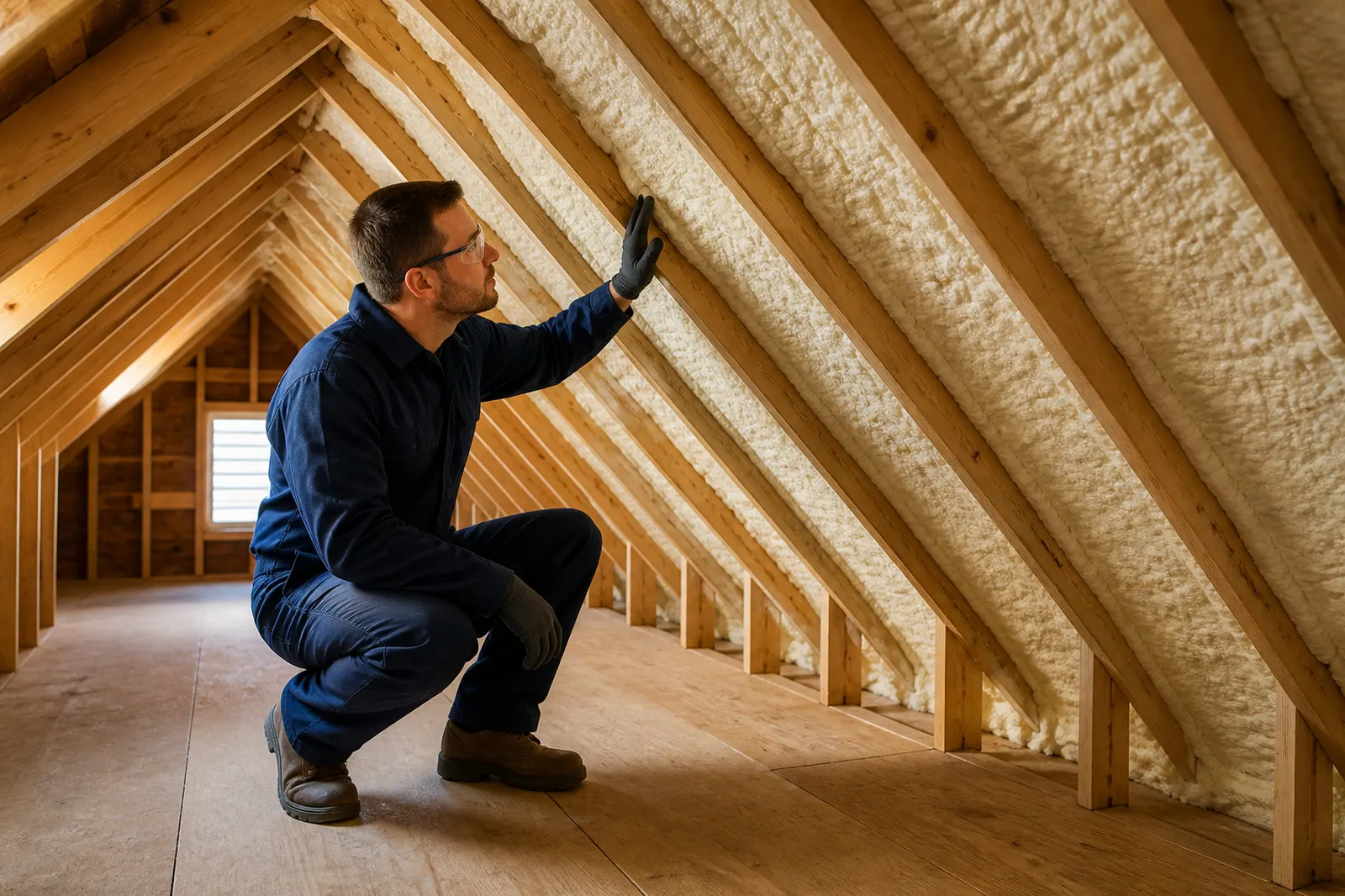
From outside, that means removing a course of siding, drilling, filling, plugging, and putting the siding back. From inside, it means drilling through plaster or drywall, filling, and patching. Which side depends on your siding type, your interior finish, and which one you would rather have repaired.
Neither is invisible. Anyone who tells you it is completely undetectable is overselling it. On vinyl siding a competent job is genuinely hard to spot afterwards. On wood clapboard or on interior plaster, there is a patch, and how well it disappears depends on the finishing work.
Full Cavity Fill
The point of the exercise. Foam has to reach the top and bottom of each bay, get around the wiring and plumbing crossing it, and fill the corners.
This is where injection foam jobs succeed or fail, and it is entirely invisible from outside. Which is why the next item exists.
Thermal Imaging Verification
We image every wall after the fill and you get the images.
A thermal camera on a cold day shows filled cavities as uniformly warmer and unfilled voids as cold patches, clearly and unambiguously. It is the only way anyone can demonstrate that the work was actually done, because the evidence is behind a wall.
A contractor who does not offer post-fill thermal imaging cannot show you what you paid for. That is not a slight on their competence. It is a statement about what is verifiable.
Working from Outside vs Inside
Outside is the default. Siding comes off in a course, holes are drilled through the sheathing, the wall is filled bay by bay, plugs go in, and the siding goes back. Best for vinyl, aluminum, and some wood siding. It keeps the mess out of your house entirely.
Inside is the answer for brick, stone, stucco, and any exterior you do not want disturbed. Holes go through the plaster or drywall and get patched and painted. More disruptive to live with, and the patching quality matters more because you will look at it every day.
We tell you which we recommend and why, and if the answer is “either works, here is the cost difference,” we will say that too.
Is Your House a Candidate?
Genuinely diagnostic, and some of the answers are no.
Good candidates
- Platform or balloon framed, with a real cavity between the studs
- Built before cavity insulation was standard, which in this area means most of the pre-1950 stock
- Cavities are actually empty, which we confirm with a borescope at the assessment rather than assuming
- Siding is vinyl, aluminum, or wood that can be removed and replaced in courses
- Wiring has been updated since the original installation
Complications we check for
Existing cavity insulation. If there is old fiberglass, cellulose, or blown material in there, injection foam cannot fill around it and the result is partial and unpredictable. Sometimes the existing material has settled and left a void at the top, which is a real and common condition, and it may be fillable. We check with a borescope; we do not guess.
Live knob-and-tube wiring. Common in pre-1950 Binghamton and Johnson City houses. Knob-and-tube depends on open air around the conductors to dissipate heat, and packing insulation around live circuits is a documented fire concern. This is a stop condition for us. The circuit gets cleared or replaced by an electrician first. We are not going to fill a wall with live knob-and-tube in it, and neither should anyone else.
Balloon framing with no fire blocking. In a true balloon-framed house, the stud bays can run continuously from the sill to the attic with nothing stopping material moving vertically. That changes how the fill is approached and it needs to be identified before, not during.
Masonry or solid walls. Brick or block with no cavity has nothing to fill. Some brick construction has a cavity and some does not, and that is determined at the assessment.
Wall condition. Water staining inside, deteriorated sheathing, or evidence of past leaks all get investigated before anything is injected. Filling a cavity that has been getting wet traps the moisture in.
Bathrooms and kitchens on exterior walls, where plumbing crosses the cavity and freeze risk is a consideration.
Why Older Binghamton and Johnson City Homes Have Empty Wall Cavities
This is not an accident and it is not a defect. It is a date.
The Endicott-Johnson Corporation dominated this area for decades, and its “Square Deal” program included the chance for shoe factory workers to buy company-built and company-financed homes. All the tanneries and most of the shoe factories were in Endicott, with satellite factories in Johnson City and Binghamton, and the housing was built around them.
Those houses went up in the early twentieth century, on modest budgets, on close-set lots, at a time when wall cavity insulation simply was not standard practice. The wall was studs, sheathing, siding on the outside, and lath and plaster on the inside, with a void in between doing nothing.
That is a large share of the housing stock in Johnson City and Endicott, and a meaningful share of Binghamton’s older neighborhoods. If you own one of these houses, the empty cavity is not something a previous owner removed. It was never there.
What it means for you: the walls are typically the largest uninsulated surface in the building, and they are the one people assume cannot be fixed without a gut renovation. They can.
How Our Injection Foam Process Works
Assessment, with a borescope.
We drill one small test hole and look inside the cavity with a camera. This tells us whether it is empty, what is in there if not, whether there is knob-and-tube, and what the framing actually is. It takes twenty minutes and it is the difference between a plan and a guess.
Written scope and itemized price.
Number of bays, access side, product and technical data sheet, patch and finish specification, and what we will do if we find something unexpected mid-job.
Access preparation.
Siding removed in courses and set aside carefully, or interior surfaces protected and holes located to minimize visible patching.
Fill, bay by bay.
Working systematically so nothing is missed. Fill rate and pressure controlled so the cavity fills rather than the plaster bulging.
Plug, patch, and reinstate.
Siding back on. Interior holes patched and ready for paint.
Thermal imaging verification.
On a suitable day, with the heat on, we image every exterior wall. Any void shows up immediately and gets filled. You get the images, before and after, as part of the handover.
Injection Foam Cost Factors
Exterior wall insulation typically runs $4,000 to $10,000 for a house.
The drivers:
- Wall area, meaning exterior wall square footage minus windows and doors
- Number of bays, which is a function of perimeter and stud spacing
- Access side. Exterior work with vinyl siding is the cleanest and usually the cheapest. Interior work adds patching and finishing.
- Siding type. Vinyl and aluminum come off and go back easily. Wood clapboard is slower and more fragile. Brick, stone, and stucco push the job inside.
- Stories. Second-floor exterior work means staging or lifts.
- Existing material in the cavities, which may make part or all of the house unsuitable
- Electrical work required first, if there is live knob-and-tube. That is an electrician’s cost, not ours, and it can be substantial.
- Patch and finish standard, particularly on interior work
For how these numbers fit a whole-house budget, see our Binghamton spray foam cost guide.
What we will not do: quote this over the phone. Nobody can, because whether the cavities are empty and what the framing is are not knowable from outside.
Explore Our Foam Insulation Services
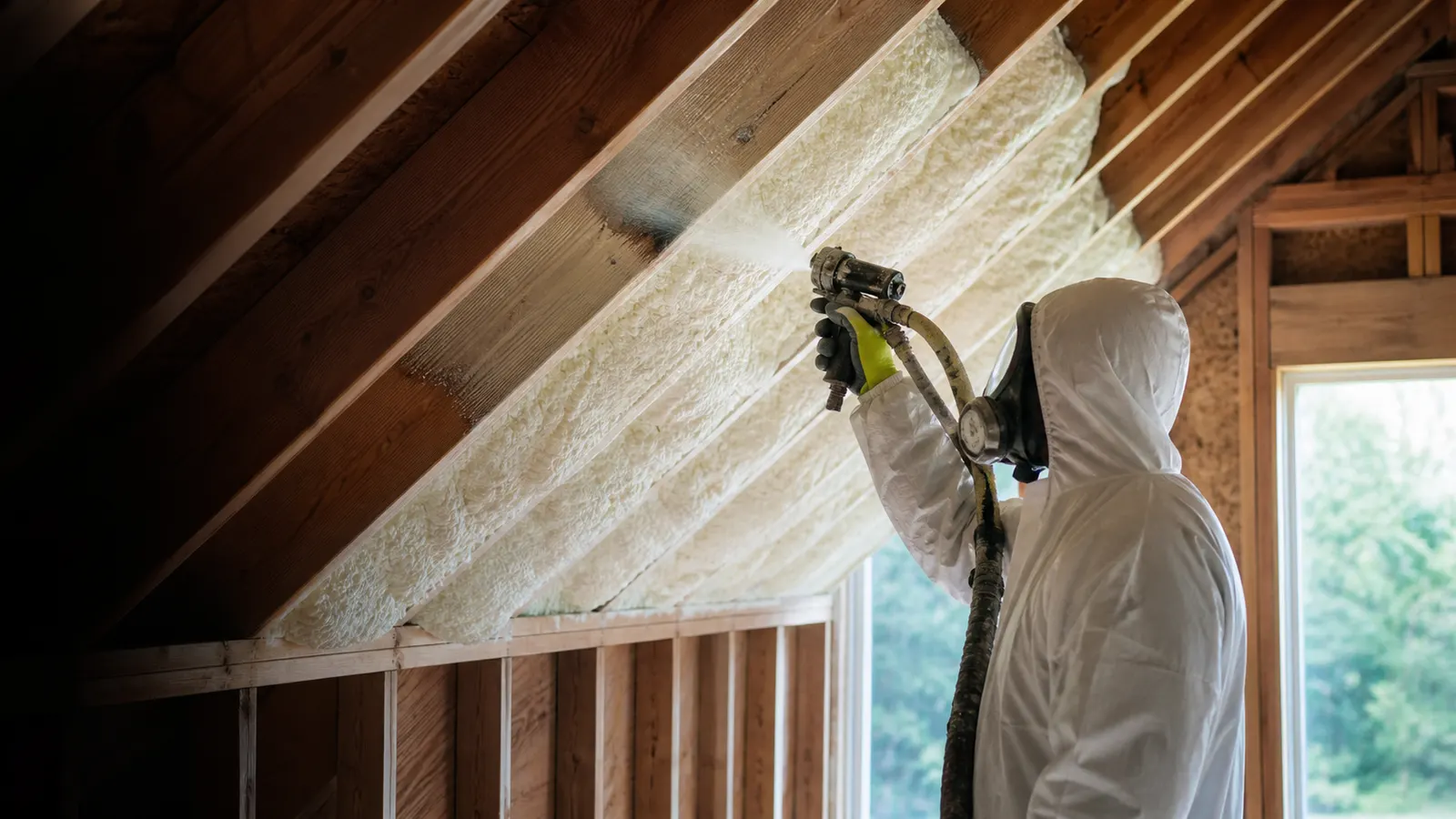
Foam Insulation
Everything we do, and the place to start if you are not sure which application yours is.Foam insulation in Binghamton.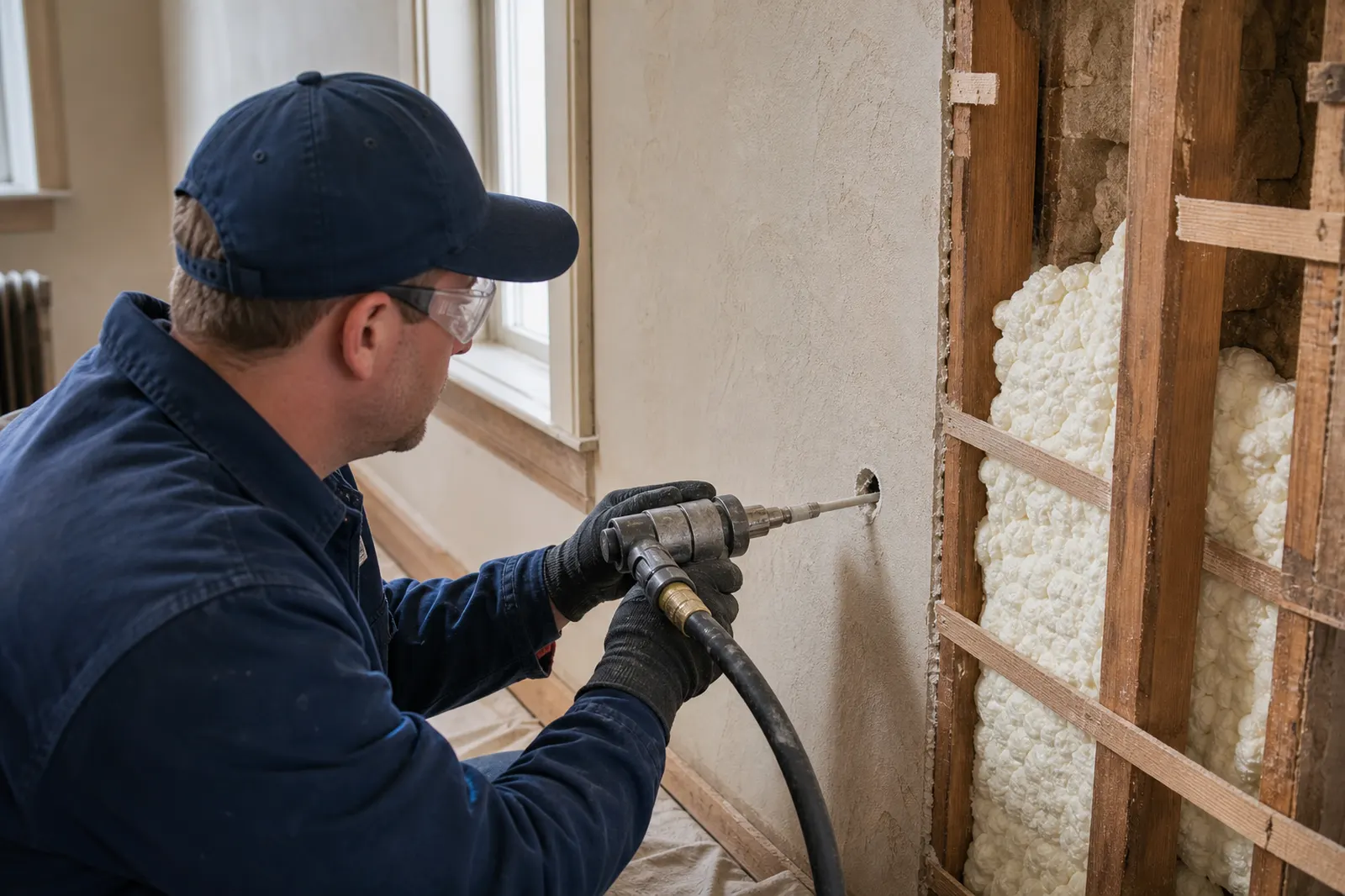
Attic Spray Foam
The other large surface. Attic and walls together is how a pre-1950 house actually gets comfortable.Attic spray foam insulation.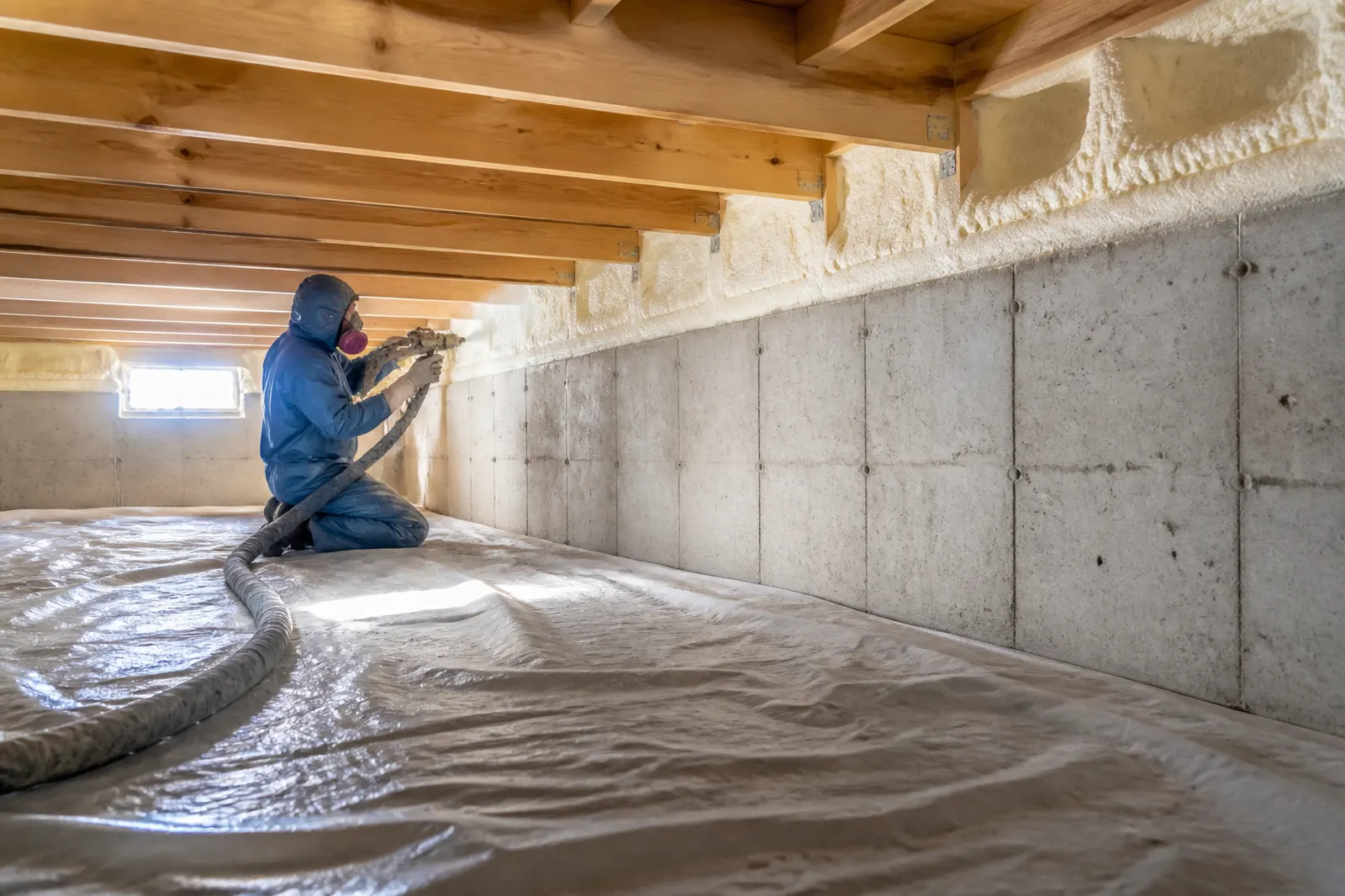
Basement, Crawl Space and Rim Joist Spray Foam
The bottom of the envelope, and usually the cheapest part of it to fix.Basement, crawl space and rim joist spray foam.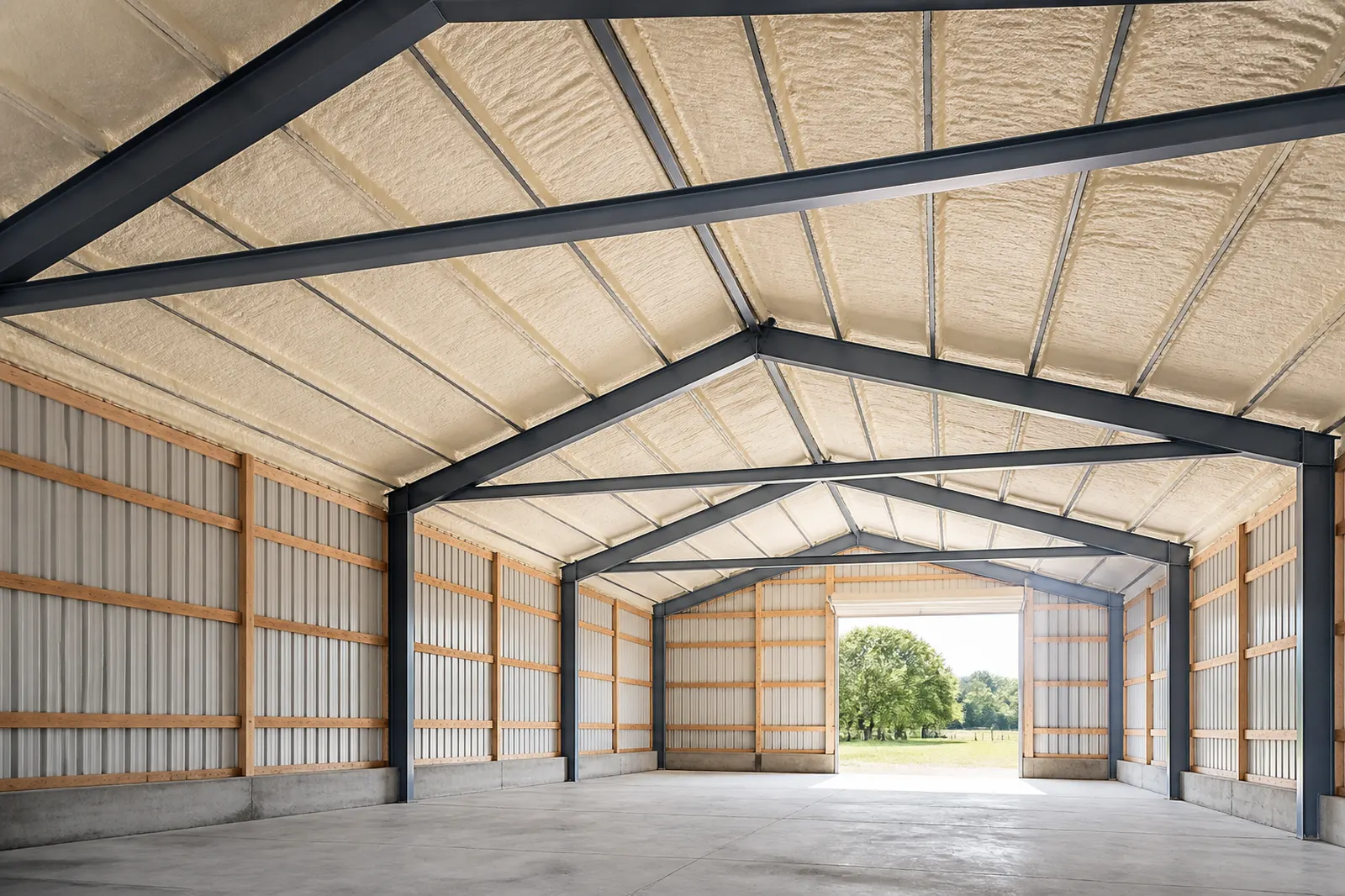
Pole Barn and Metal Building Spray Foam
Detached garages, workshops, and outbuildings.Pole barn and metal building spray foam.Injection Foam Wall Insulation Across Greater Binghamton
Johnson City
The strongest market for this service in the county. Dense Endicott-Johnson-era worker housing where empty wall cavities are the norm rather than the exception.Endicott
Comparable factory-era stock, with the added consideration that floodplain-adjacent walls get checked for moisture history before anything is injected.Vestal
More mixed. Post-war stock often has some cavity insulation already, which changes whether injection foam is viable. The borescope check matters more here.Endwell
Mid-century ranch stock, generally with some original insulation, so candidacy varies house by house.Why Choose Us
We borescope the cavity before we quote. One small hole, a camera, twenty minutes. It tells us whether the job is viable at all, and it means the number we give you is based on what is in your wall rather than what is usually in walls that age.
We thermal image after the fill, and the images are yours. It is the only proof that exists for work behind a wall.
Live knob-and-tube is a stop. We will tell you what it costs to resolve and we will wait. We are not going to fill a wall around live knob-and-tube because you wanted the job done this month.
We publish the product data sheet in the written scope, before you agree to anything.
We will tell you when the answer is no. Cavities that already have settled cellulose in them, brick walls with no cavity, and houses where the electrical has to come first are all real outcomes of an assessment, and hearing one of them is a better result than a job that does not work.
Injection Foam FAQs
Can you really insulate my walls without tearing them open?
Yes. Foam is injected through small access holes, either from outside behind a removed course of siding or from inside through the plaster, and the holes are then plugged and patched. No demolition, no re-siding, no taking rooms apart.
What it is not is invisible. On vinyl siding a good job is genuinely hard to find afterwards. On wood siding or interior plaster there is a patch, and how well it disappears is down to the finishing.
How do I know the cavities actually filled?
Thermal imaging after the job, and you should insist on it from anyone doing this work. On a cold day with the heat on, a filled cavity shows as uniformly warmer and a void shows as a cold patch. It is clear, immediate, and the only verification that exists for work you cannot see.
We image every wall and hand over the images. A contractor who does not offer this is asking you to take their word for it about something nobody can check.
I have knob-and-tube wiring. Can you still do it?
Not while it is live. Knob-and-tube depends on open air around the conductors to dissipate heat, and packing insulation around live circuits is a documented fire concern.
The path is: an electrician confirms which circuits are live, and those are either de-energised or replaced. Then we fill. That is an additional cost and sometimes a substantial one, and it is worth finding out early rather than after you have budgeted for insulation.
My house is from the 1960s. Does it have insulation already?
Often some, and often not much, and settled. Post-war stock in Vestal and Endwell frequently has original fiberglass or rock wool that has compressed and left a void at the top of each cavity. Sometimes that void is fillable and worth filling. Sometimes it is not.
This is exactly what the borescope check answers, and it is why we do it before quoting rather than after.
Will this stop drafts?
Substantially, in the walls. Foam fills around wiring, plumbing, and the gaps that air was moving through.
What it will not do is address the rim joist, the attic, or the windows, which are usually the bigger leaks. If drafts are your main complaint, the rim joist is cheaper and often more effective, and we would rather tell you that than sell you the bigger job first.
Does injection foam settle over time?
Properly cured polyurethane does not settle the way loose fill does; it is a rigid cured solid bonded to the cavity. That is one of its main advantages over blown cellulose in a wall, as our spray foam vs cellulose vs fiberglass comparison explains.
How long does it take?
Most houses are one to three days including access preparation, filling, and reinstatement, with thermal imaging on a separate suitable day.
Get an Injection Foam Quote
Free property assessment
Get Your Free Foam Insulation Quote
- Free assessment at your property
- Written scope and itemized price
- The product data sheet, attached
- Callback within one business day
Free assessment including a borescope look inside the cavity, so the answer you get is about your wall rather than about walls in general.