If your barn rains on the inside, that is condensation, not a leak, and closed-cell spray foam is the only thing that reliably stops it.
You know the situation if you have it. Cold clear morning, you fire up the heater in the shop, and within an hour water is dripping off the underside of the steel roofing onto whatever is parked below. It is not coming through the roof. It is coming out of the air in the building, condensing on a steel skin that is the same temperature as the outdoors.
We spray closed-cell foam directly onto the underside of steel roofing and onto pole barn walls across Broome and Tioga counties. Barns, workshops, detached garages, agricultural outbuildings, and metal buildings of any age.
Buildings We Spray Foam
Post-frame construction with steel skin on purlins and girts. The most common building type we work in out here and the most straightforward, because there is nothing in the way.
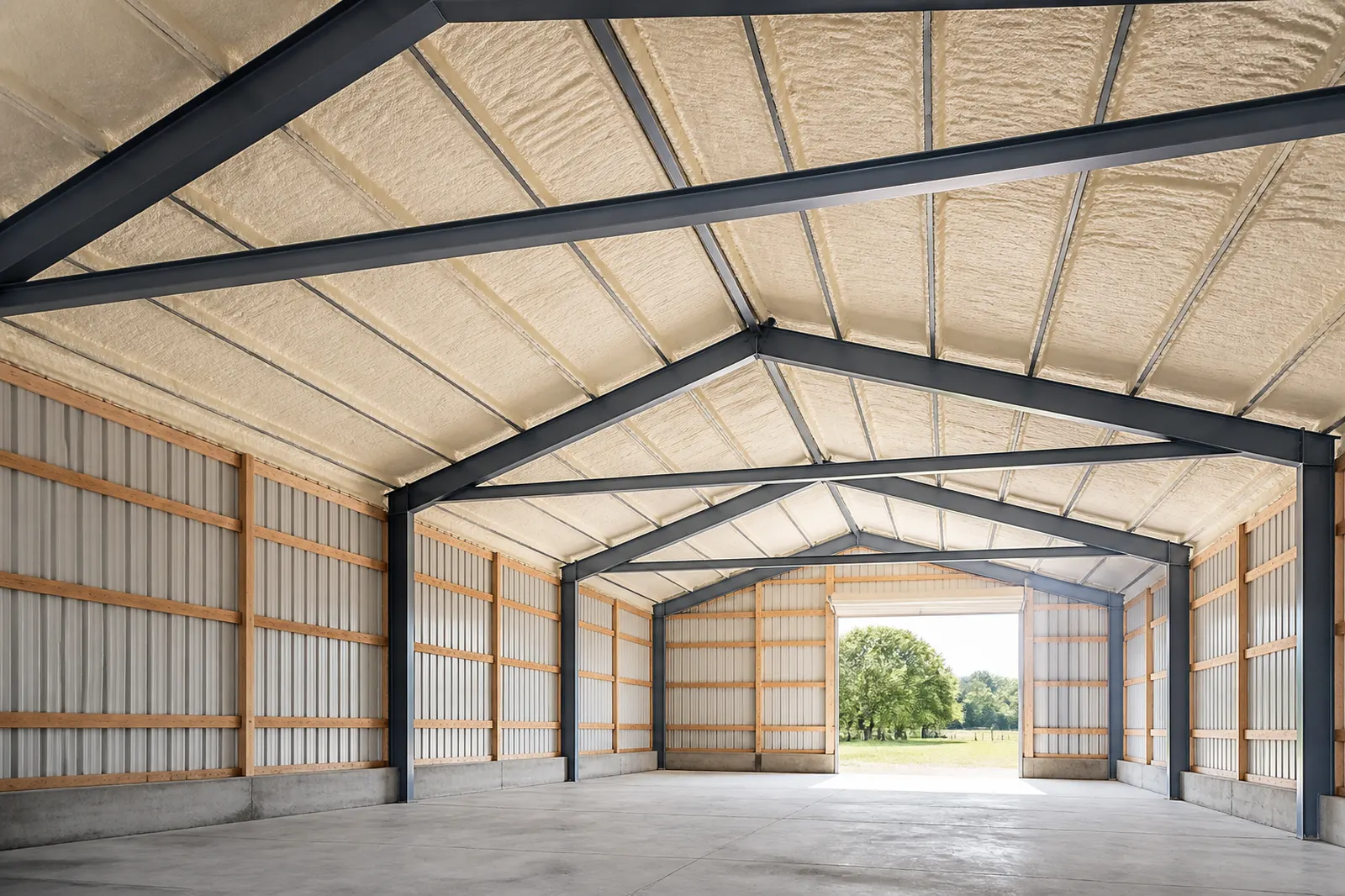
Foam goes directly onto the underside of the steel and between the purlins, bonding to both. No vapor barrier to install, no fasteners, no batts to hold up, and nothing for a rodent to nest in.
Metal Buildings and Steel Roofing
Pre-engineered steel buildings, and any structure with exposed steel roofing over an open interior. Same principle, and the condensation problem is usually more acute because there is more steel and less mass.
Detached Garages and Workshops
Wood-framed with steel or shingle roofing. Often the highest-value job on this page in comfort terms, because it is the building somebody is actually trying to work in through a Binghamton February.
Agricultural Outbuildings
Equipment storage, shops, and general-purpose barns across the rural parts of Broome and into Tioga County. If you are heating it at all, foam changes the arithmetic completely. If you are not heating it, foam still stops the condensation ruining what is stored inside.
Condensation Control on a Metal Building
This is the actual reason most people call, and almost nobody markets to it directly.
The mechanism: warm interior air; cold steel skin; the air touching that steel drops below its dew point; water condenses on the steel and drips off.
Steel has essentially no thermal mass and no insulating value. The inside surface of an uninsulated steel roof is, for practical purposes, the outdoor temperature. On a Binghamton morning in January that is 16 degrees. Any air in the building with a dew point above 16 degrees, which is nearly all of it once you have a heater running or a vehicle brought in wet, will give up water onto that surface.
Why the usual attempts fail:
- Vinyl-faced fiberglass blanket, the standard pole barn insulation, slows it down but the facing is rarely sealed continuously, and once air gets behind it the condensation happens where you cannot see it and the blanket holds the water against the steel.
- Ventilation helps in some conditions and makes it worse in others, because in summer you are bringing humid air in.
- A dehumidifier in a building with an air leakage rate this high is trying to dry the outdoors.
Why closed-cell foam works: it bonds directly to the steel, so there is no air gap and no path for air to reach the cold surface. The steel is still cold, but no interior air can touch it. The condensing surface is eliminated rather than managed. Foam is also its own vapor retarder, so there is no separate facing to seal and nothing to fall down in five years.
Warm interior air; cold steel skin; condensation drip onto stored equipment becomes closed-cell foam bonded to the deck; no accessible cold surface; no drip.
Heating a Pole Barn: What Insulation Changes
If you have ever tried to heat an uninsulated pole barn, you know the answer already: you cannot. The heat goes through the steel about as fast as you can produce it, and the moment the heater stops the building is cold again.
What foam changes:
- You can hold a temperature. An insulated pole barn holds heat long enough that a modest heater keeps it usable, instead of a large heater failing to.
- You can heat it intermittently. An uninsulated building has to be heated from scratch every time. An insulated one comes back up in a fraction of the time.
- The fuel arithmetic becomes reasonable. With NYSEG residential electricity around 17.8 cents per kWh, heating an uninsulated steel building electrically is not a serious proposition. Insulated, it can be.
- Equipment stops rusting. The condensation is what does the damage, and it is doing it whether or not the building is heated.
Depth matters here more than in a house, because the temperature difference across the assembly is larger when you are trying to hold 60 degrees in a building at 16 degrees outside, and because there is no interior finish holding anything in place. We specify depth from the intended use rather than from a default.
One note on climate zone: Broome County is in IECC climate zone 6. Tioga County, immediately to the west, is not on the zone 6 list. If your building is over the county line, the code baseline may differ, and we check it rather than assuming.
How the Process Works
Assessment, at the building.
Floor area and wall height measured, deck type identified (steel, wood, purlin spacing), interior finish noted, door and window openings counted, and we ask what you actually want the building to do. A cold storage barn where you want the dripping to stop is a different specification from a heated shop you intend to work in daily.
Written scope and itemized price.
Product name and technical data sheet, depth, treated surface area, containment, and access requirements.
Access and prep.
The rig needs to reach the building and the hoses have a finite length. Buildings a long way from where a truck can park are a real logistical factor and we work it out at the assessment rather than on the day. Everything not being sprayed gets covered, and on a working barn that is usually a lot.
Clear the building.
Vehicles, equipment, tools, and anything with a finish out. This is generally the largest ask we make of a barn owner and it is not optional. Overspray on a tractor is permanent.
Application.
Directly to the deck and walls, in the specified depth, in passes.
Cure and re-entry.
EPA guidance is that occupants and other workers vacate during spray polyurethane foam installation and that re-entry waits until the product has cured and the space has been ventilated. Professional two-component systems commonly cite around 24 hours; the interval for your job is on the product data sheet we give you. On a barn, ventilation during and after is straightforward because you can open the doors, which usually makes this the least complicated part of the job.
Photographs and handover.
Pole Barn Spray Foam Cost Factors
Closed-cell spray foam runs $3.00 to $5.00 per square foot installed, and a pole barn’s treated surface area is large.
The drivers, in rough order:
- Treated surface area, meaning roof deck plus wall area, not floor area. A 40 by 60 pole barn with 14-foot walls has 2,400 square feet of floor and roughly 5,200 square feet of surface to spray. That distinction is the biggest source of surprise on this job.
- Wall height. Directly affects both the area and the difficulty. Fourteen and sixteen-foot walls need lifts.
- Deck type and purlin spacing. Wide purlin spacing means large unsupported spans of steel and more surface area than the flat dimensions suggest.
- Depth specified, which follows from what you want the building to do.
- Whether the building is finished inside. Existing liner panel, blanket insulation, or partition walls all change the job. Removing failed vinyl-faced blanket is its own line item and it is unpleasant.
- Door and window openings, which reduce the area but add edge detailing.
- Access. How close the rig can get, and whether hose length reaches the far corner.
- Whether you clear the building, which you should, and whether we have to.
Why this is worth doing properly: a pole barn is one of the few buildings where the whole envelope can be done in a single application with nothing in the way, which means the cost per square foot of treated surface is at the low end of what foam ever costs. It is also a building nobody is going to insulate twice.
Explore Our Foam Insulation Services
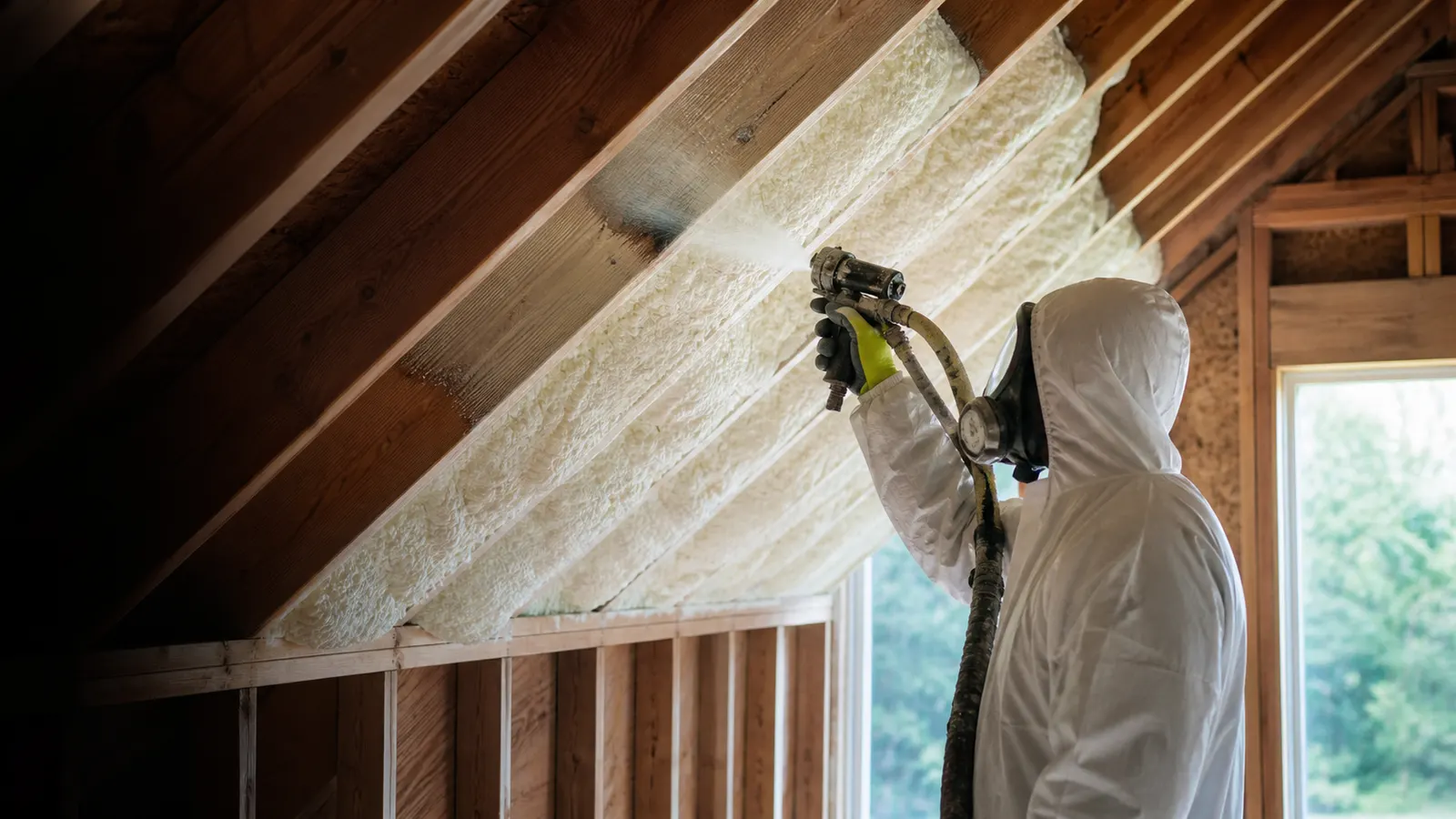
Foam Insulation
Everything we do, and the place to start if you are not sure which application yours is.Foam insulation in Binghamton.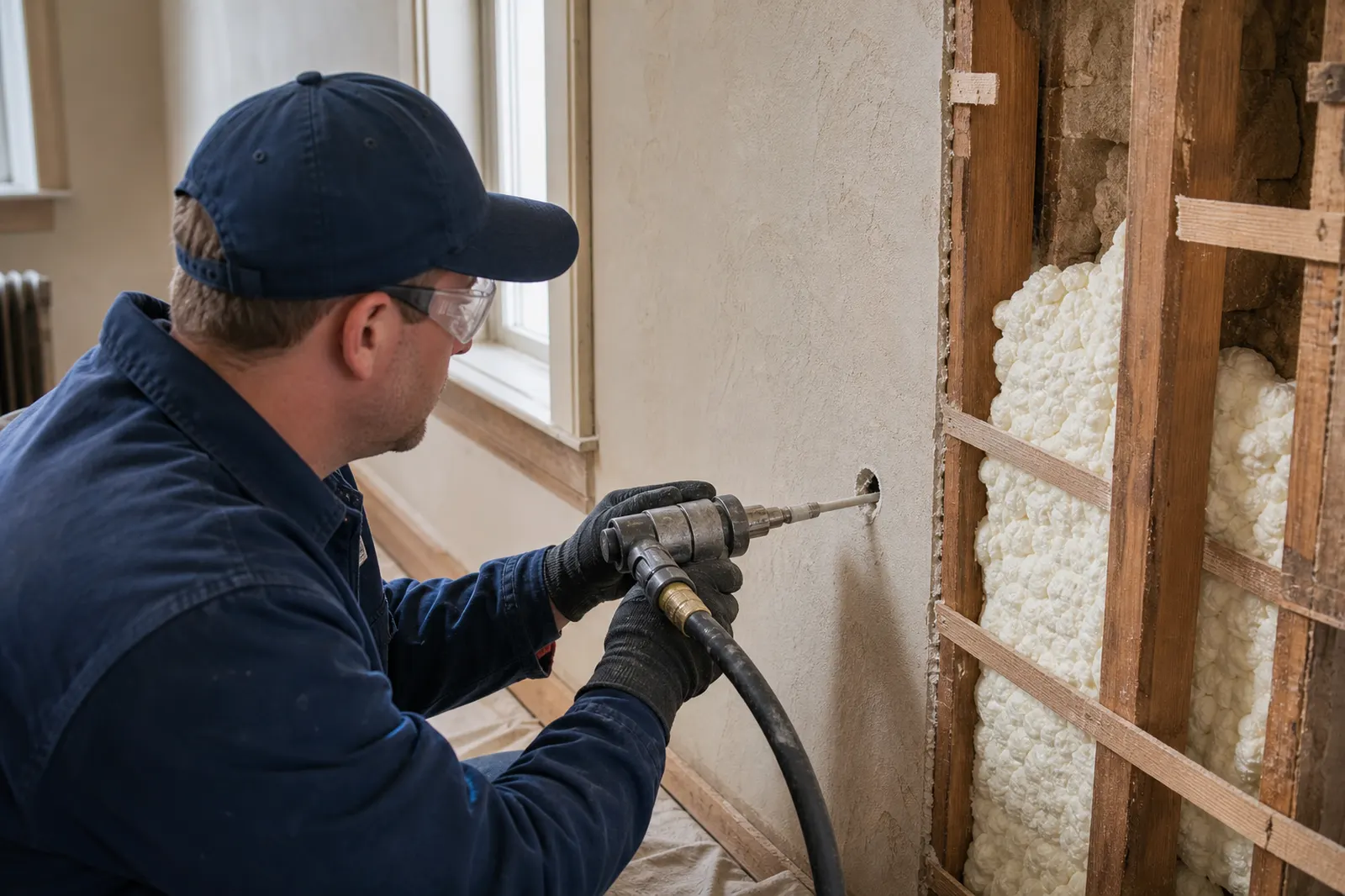
Attic Spray Foam
For the house.Attic spray foam insulation.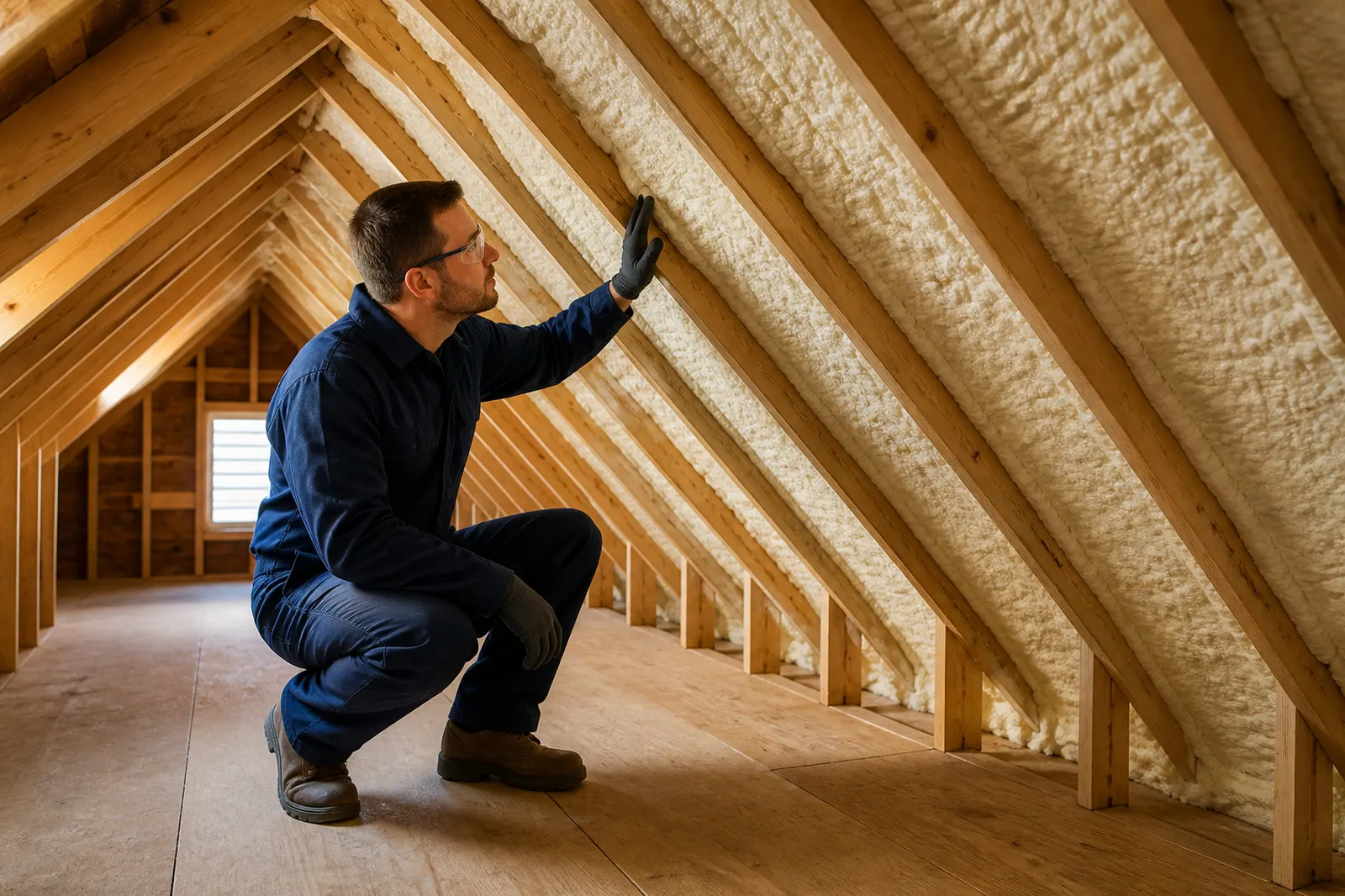
Injection Foam Wall Insulation
Existing wall cavities in older houses, filled without demolition.Injection foam wall insulation.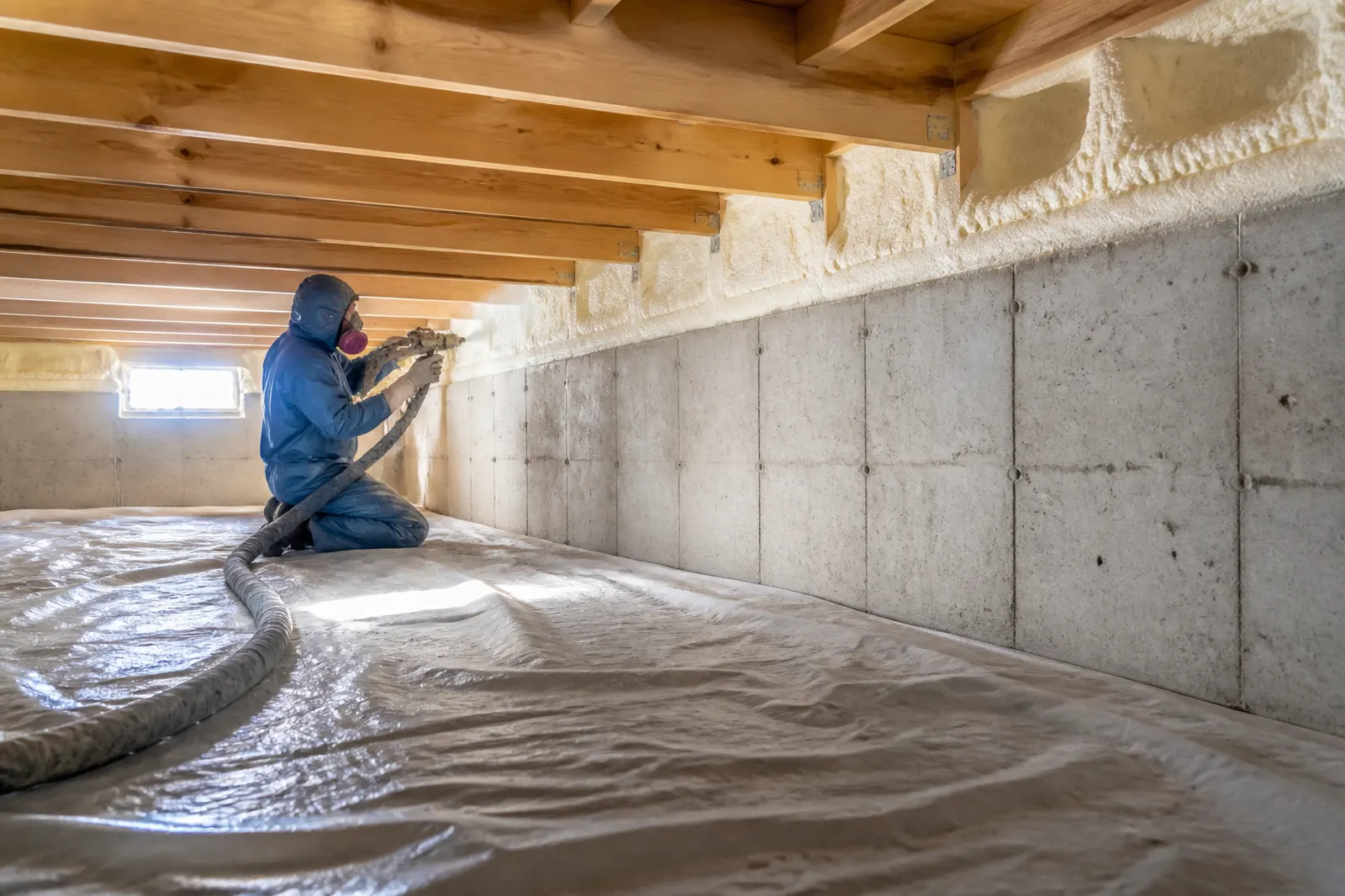
Basement, Crawl Space and Rim Joist Spray Foam
Below the first floor.Basement, crawl space and rim joist spray foam.Serving Broome and Tioga Counties
Johnson City
Detached garages and workshops on close-set village lots, where access is the main constraint.Vestal
Larger suburban lots with detached garages and shops, extending west toward Apalachin.Endicott
Village and surrounding town properties, including outbuildings on the western edge.Endwell
Ranch stock with more detached garages and outbuildings than the villages.Rural coverage: we go further for this work than for house jobs, because pole barns are where they are. Conklin, Chenango Bridge, Chenango Forks, Kirkwood, Windsor, Union Center, and across into Tioga County around Apalachin, Owego, and Nichols. If you are outside that and have a building worth doing, call and ask.
Why Choose Us
We ask what the building is for before we specify depth. A cold storage barn where you want the dripping to stop and a heated shop you work in every day are different specifications. Quoting both the same way means one of them is wrong.
We tell you honestly what clearing the building involves. It is the biggest ask on this job and pretending otherwise leads to a bad day for everyone.
We publish the product data sheet in the written scope, with the depth and the R-value per inch from the manufacturer rather than from a brochure.
We check the climate zone for your actual location. Broome is zone 6; Tioga is not on the zone 6 list. If you are across the line, the baseline may differ.
Photographs before and after.
Pole Barn Spray Foam FAQs
Why does my barn drip water when it isn’t raining?
That is condensation, and it is coming out of the air inside the building. Steel roofing has no insulating value, so its inside surface is essentially the outdoor temperature. When interior air with a dew point above that temperature touches it, water condenses and drips.
It is worst on cold clear mornings, worst after you have been running a heater or brought a wet vehicle in, and it is not a roof leak. Closed-cell foam bonded to the underside of the steel eliminates the surface the air can condense on.
Will vinyl-backed fiberglass blanket fix it?
Partly, and unreliably. The facing has to be continuously sealed to work, and on most installations it is not. Once air gets behind it, the condensation happens where you cannot see it and the blanket holds the water against the steel, which is worse than nothing. Failed blanket in a ten-year-old barn is a common sight out here.
How much foam do I need?
Depends on what the building is for. Enough to stop condensation is less than enough to hold heat efficiently in a working shop. We specify from the intended use, and we will tell you what the difference costs so you can decide.
Do I have to empty the barn?
Yes, or at least everything you care about. Overspray on a vehicle, a tool, or a piece of equipment is permanent. This is genuinely the largest ask we make and it is worth planning for a week ahead rather than the morning of.
Can you do it in winter?
Depends on the product and the temperature. Spray foam has an application temperature range and the substrate has to be within it, which on a steel deck in January often means heating the building first. Some products are formulated for lower temperatures. It is a real constraint rather than a scheduling preference, and we will tell you honestly whether your job can happen in February or whether it wants to wait for April.
My barn is in Tioga County. Do you go out there?
Yes. Pole barn and metal building work has a wider radius than our house work, and Tioga is well within it. Note that Tioga is not on the New York climate zone 6 list, so if code compliance matters for your building we check the applicable baseline rather than assuming Broome’s.
How long does it take?
Most pole barns are one to two days for application. Clearing the building is on you and it takes longer than you think.
Is it worth doing if I don’t heat the barn?
Often yes, for the condensation alone. The dripping is what rusts equipment, ruins stored material, and rots any wood in the structure, and it happens whether or not you are heating. Plenty of the barns we do are unheated storage where the owner simply wants the raining to stop.
Get a Pole Barn Spray Foam Quote
Free property assessment
Get Your Free Foam Insulation Quote
- Free assessment at your property
- Written scope and itemized price
- The product data sheet, attached
- Callback within one business day
Free assessment at the building. Tell us what you want it to do and we will tell you what depth that takes and what it costs.